
When Horses Can’t Sleep: The Hidden Welfare Crisis of Recumbent Sleep Deprivation
Chronic REM sleep debt causes spontaneous collapse, cognitive impairment, and immune dysfunction. Yet sleep remains largely absent from welfare frameworks. Why?

I recently came across a mare who collapsed without warning while standing in the cross-ties. I happened to be passing by and saw the scene first-hand: one moment che was standing quietly for grooming, the next crumpled on the concrete, abraded knees bleeding, eyes wide as she scrambled upright.
I started asking her caretaker about subtle signs in the previous months: excessive daytime drowsiness, head-dropping while standing, repeated forelimb buckling that left scabs on her knees. He told me he had never linked this signs together, but the symptoms had been there. Small clues, nothing as dramatic as a sudden collapse.
The veterinary diagnosis: recumbent sleep deprivation. Chronic, severe REM sleep debt so extreme that her brain had essentially overridden voluntary control, forcing a sleep state while she stood. When REM sleep occurred, muscle atonia, the complete loss of skeletal muscle tone characteristic of this sleep state, caused collapse.
The mare had been trying to tell them for months, but nobody had known how to listen.
THE BIOLOGY OF EQUINE SLEEP
Understanding why this happens requires understanding how horses sleep.
Horses are polyphasic sleepers, distributing their total sleep time (3-4 hours per 24-hour period) across multiple short episodes rather than consolidating sleep into one long bout like humans. This fragmentation reflects evolutionary ecology: as prey animals, horses benefit from vigilance. Sleeping in short bursts reduces vulnerability to predation.
Two distinct sleep states occur, defined by electroencephalographic (EEG) patterns: NREM (non-rapid eye movement) and REM (rapid eye movement).
NREM sleep involves synchronised, high-amplitude, low-frequency brain waves (primarily delta waves, 0.5-4 Hz). This slow wave sleep is associated with cellular restoration, metabolic recovery, and immune function. Horses can achieve NREM sleep while standing due to a specializsd stay apparatus—passive anatomical locking mechanisms in the limbs that prevent collapse without active muscular effort.
REM sleep is fundamentally different. Brain activity during REM resembles wakefulness, so desynchronised, mixed-frequency waves, earning it the name “paradoxical sleep.” But this wakeful-appearing brain state occurs alongside complete muscle atonia: skeletal muscles lose all tone except those controlling respiration and cardiac function.
This atonia serves important functions. It prevents the physical enactment of dreams, which would be dangerous and metabolically costly. It allows complete muscular relaxation, facilitating processes that require absence of postural muscle tension. And it may play roles in memory consolidation and emotional regulation that aren’t yet fully understood.
But muscle atonia has an unavoidable consequence: REM sleep cannot occur while standing. A standing horse entering REM sleep will collapse.
Therefore, horses must lie down to achieve REM sleep. They can adopt either sternal recumbency (sternum on ground, legs folded beneath) or lateral recumbency (lying on side, legs extended). Both positions allow REM sleep to occur safely because the horse’s body weight is supported by the ground rather than by muscles that will lose tone when REM sleep begins.
The average REM sleep sequence in horses lasts 3-7 minutes. Horses need multiple such sequences across a sleep period. Total REM sleep typically constitutes 17-20% of total sleep time, lower than many mammals, but still non-zero. Complete absence of REM sleep is pathological.
WHEN HORSES WON’T LIE DOWN
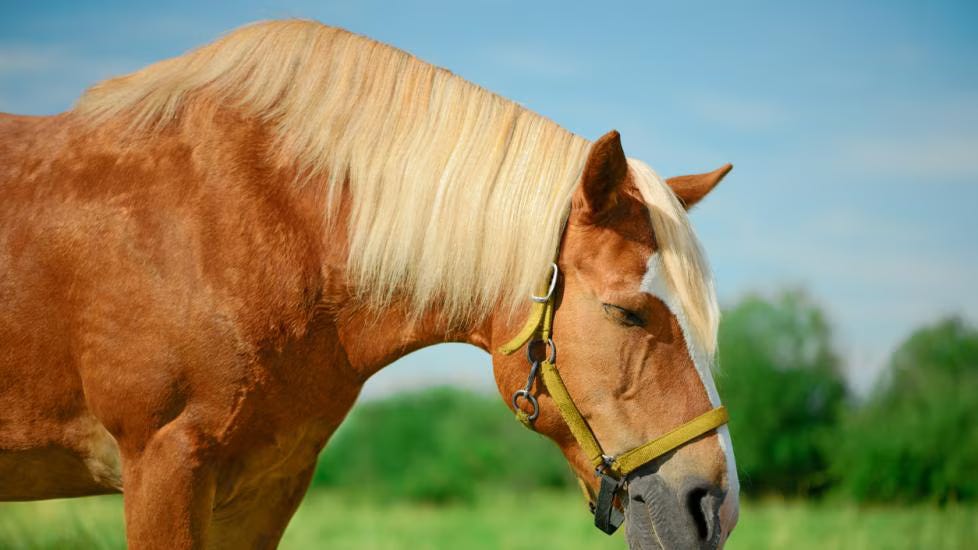
The mare who collapsed in the cross-ties had stopped lying down weeks earlier. Her caretakers hadn’t noticed because she still appeared to rest: standing quietly with weight distributed across three legs, head lowered, eyes half-closed.
This standing rest is genuine rest as metabolic rate decreases, responsiveness to stimuli reduces. But it’s not sleep, or at least not REM sleep. And while horses can supplement NREM sleep standing, they cannot achieve REM sleep this way.
Why do horses stop lying down?
Multiple management factors create conditions where lying down feels unsafe or becomes physically impossible:
Spatial constraints: Research demonstrates horses require minimum stable dimensions of 3.6m × 3.6m for comfortable recumbency. Smaller boxes constrain the horse’s ability to lie flat with legs extended without touching walls, door, or fixed fixtures. Many commercial facilities provide smaller boxes (usually 3m × 3m or sometimes even 2.7m × 3m) based on building codes or cost minimisation. These dimensions are adequate for standing, eating, and limited movement. They’re inadequate for comfortable, sustained recumbency.
The problem compounds when horses are tall, heavily muscled, or wearing protective equipment (blankets, leg wraps) that increase body dimensions. A 16.3hh warmblood in a 3m × 3m stable wearing a heavy winter rug physically cannot lie fully flat without legs or head contacting barriers.
Bedding inadequacy: Substrate matters. Studies consistently demonstrate that straw bedding correlates with higher recumbency duration compared to wood shavings or other alternatives. The reasons are likely multiple: straw provides better thermal insulation (relevant in cold conditions), superior cushioning (distributing pressure more evenly), and possibly different tactile properties that horses find more comfortable.
Bedding depth is equally critical. Research shows bedding less than 10cm thick significantly reduces recumbency regardless of substrate type. Yet thin bedding remains common because of cost (bedding is expensive) and labor (deep bedding requires more frequent mucking). The economic logic is understandable. The welfare consequence is reduced sleep.
Hard flooring beneath inadequate bedding makes lying down uncomfortable and rising afterward difficult, particularly for older horses or those with musculoskeletal issues. Rubber mats provide some cushioning but don’t substitute for deep, soft bedding from a sleep perspective.
Social instability: Horses are social sleepers. Wild and feral horses demonstrate synchronised sleep where some individuals rest while others maintain vigilance, rotating roles so all group members eventually sleep. This mutual vigilance-sharing allows deeper sleep because no individual bears sole responsibility for threat detection.
Domestic housing often disrupts this social structure. Horses housed individually lack companions to share vigilance. Horses housed with incompatible individuals such as aggressive neighbours, recently introduced strangers, or those with unstable hierarchies, maintain high vigilance preventing relaxation. Even compatible companions don’t immediately establish the trust required for synchronised sleep; this develops over time in stable groups.
Social sleep patterns also mean that disrupting one horse’s sleep can cascade to others. A horse disturbed during sleep may alert companions, fragmenting their sleep even though the disturbance wasn’t directed at them. This creates contagious sleep disruption where management actions affecting one animal compromise the entire group.
Environmental threat perception: Horses assess environmental safety continuously. Novel environments increase vigilance. Unpredictable disturbances as humans working in the barn during night hours, unusual sounds, unfamiliar animals, elevate arousal and suppress sleep.
Horses also assess physical security of sleep sites. Stables with open tops, transparent panels allowing visual monitoring from multiple directions, or escape routes may feel safer than enclosed boxes where the horse cannot see potential threats approaching. Paradoxically, some horses feel more secure in enclosed spaces that conceal them from view. Individual horses have individual preferences based on prior experience.
Perceived vulnerability matters more than actual threat. A horse in a perfectly safe barn may still feel unsafe based on cues humans don’t consciously register: air currents, shadows, sounds outside normal frequency range. The horse’s perception determines behaviour, not the objective environment.
Chronic pain: Musculoskeletal pain makes lying down and rising physically difficult. Arthritic joints stiffen when immobile; the process of folding into recumbency and unfolding to stand becomes painful. Laminitic horses avoid weight-bearing positions that stress compromised hooves. Horses with back pain find lateral recumbency (which requires spinal flexion) uncomfortable.
Gastrointestinal pain also discourages recumbency. Horses with gastric ulcers, colonic impactions, or inflammatory conditions may experience increased discomfort when lying down due to altered pressure distribution on abdominal organs. The horse learns through experience that lying down causes pain, creating learned avoidance even when the primary condition improves.
Older horses face cumulative challenges: age-related arthritis, muscle loss reducing cushioning, reduced proprioception making rising more effortful. The physical act of achieving recumbency and rising afterward becomes increasingly demanding, creating reluctance even when the horse is otherwise healthy.
Lighting schedules: Light is the primary zeitgeber, the environmental cue entraining circadian rhythms. Horses exposed to artificial light at night experience disrupted circadian patterning, reducing total sleep time and fragmenting sleep architecture.
This matters particularly in breeding operations where mares receive extended photoperiod (16+ hours of light per day) to advance seasonal reproductive cycling. While reproductively effective, this light exposure desynchronises the mare’s internal sleep-wake cycling from natural environmental cues, reducing sleep quality and quantity.
Even lower-intensity artificial light left on overnight for barn monitoring purposes suppresses melatonin secretion and fragments sleep. Red wavelength light is less disruptive than white light, but any light exposure during natural dark periods has some effect.
THE CASCADE TO COLLAPSE
These factors rarely occur in isolation. A typical scenario might involve:
A competition horse housed in a 3m × 3m stable with thin shavings bedding, individually housed or with recently introduced neighbours, in a barn with overnight artificial lighting, wearing protective leg wraps and a heavy blanket, experiencing low-grade musculoskeletal soreness from training, with barn staff performing late-night checks and early-morning feeding that fragment rest periods.
Any single factor might be tolerable. The combination is not.
The horse initially adapts. Total sleep time decreases, but the horse appears functional. Perhaps they’re drowsier during the day, less sharp during training, but not dramatically impaired. Handlers attribute this to “laziness” or “attitude” rather than sleep deficiency.
Over weeks, sleep debt accumulates. The homeostatic drive to sleep intensifies. The horse begins showing signs of micro-sleep while standing: brief episodes where the head drops, lower lip relaxes, weight shifts unevenly. These last seconds before the horse startles awake. Handlers dismiss them as daydreaming.
The forelimbs begin buckling briefly. The horse’s knees touch the ground momentarily then the horse jerks upright, alert but confused. This happens repeatedly, leaving scabs on the knees. Handlers assume the horse is clumsy or playing in the stable.
Then comes the collapse. Not during a micro-sleep episode, but during routine activity. The horse is standing in cross-ties, or eating, or being groomed. The accumulated sleep debt reaches a threshold where homeostatic pressure overrides voluntary control. The brain forces REM sleep to occur.
Muscle atonia happens. The horse collapses, often forward onto the knees as forelimbs lose tone first. Injuries occur: abraded or fractured knees, facial trauma if the head strikes ground or walls, sometimes catastrophic injuries if the collapse occurs in confined spaces or while wearing tied equipment.
The horse scrambles upright, frightened and confused: they weren’t trying to lie down, they just lost control. This is terrifying for a prey animal whose survival depends on mobility.
Now there’s a secondary problem. The horse associates lying down with loss of control, developing anxiety about recumbency that persists even after environmental barriers are removed. The collapse itself becomes a barrier to recovery because the horse no longer feels safe adopting the posture required for REM sleep.
CONSEQUENCES BEYOND COLLAPSE
Spontaneous collapse represents severe, end-stage sleep deprivation. But consequences manifest long before crisis.
Cognitive impairment: Sleep deprivation impairs learning, memory consolidation, attention, and decision-making across all mammals studied. The mechanisms are multiple: reduced synaptic plasticity during NREM sleep, impaired memory consolidation during REM sleep, accumulated cellular metabolites interfering with neural signaling, hormonal disruptions affecting neurotransmitter systems.
For performance horses, cognitive impairment manifests as:
Inconsistent responses to familiar cues despite adequate training
Difficulty learning new movements or patterns
Reduced problem-solving capacity (navigating complex jumping courses, adjusting pace in endurance competition)
Apparent “lack of try” that’s actually cognitive inability to process and execute requests
Increased errors in movements requiring spatial awareness or timing precision
These effects are subtle initially. The horse isn’t dramatically impaired, just slightly less sharp than baseline. Over time, the degradation compounds. A horse who was reliably responsive becomes inconsistent. A horse who learned quickly now requires more repetition. Handlers attribute this to attitude problems, physical soundness issues, or training plateaus rather than sleep deficiency because sleep isn’t routinely considered.
Immune dysfunction: Sleep is critical for immune regulation. During sleep, particularly NREM sleep, the immune system upregulates pathogen surveillance, enhances lymphocyte proliferation, and modulates inflammatory responses. Sleep deprivation impairs these processes.
Consequences include:
Increased susceptibility to respiratory infections in horses exposed to routine pathogens
Slower wound healing and tissue repair after injury or surgery
Reduced vaccine response, potentially requiring altered vaccination protocols
Exacerbation of inflammatory conditions (joint inflammation, skin allergies, inflammatory bowel conditions)
Increased vulnerability to opportunistic infections during periods of additional stress (transport, competition, environmental changes)
A horse prone to respiratory infections may have underlying sleep deficiency that impairs immune surveillance of the upper respiratory tract. A horse whose wounds heal slowly may be experiencing reduced cellular repair processes that occur primarily during sleep.
Metabolic dysregulation: Sleep loss affects glucose metabolism, insulin sensitivity, appetite regulation, and energy balance. Chronic sleep deprivation is associated with:
Altered glucose tolerance and insulin sensitivity, potentially contributing to metabolic syndrome or insulin dysregulation
Disrupted appetite regulation hormones (leptin, ghrelin), potentially affecting feed intake patterns
Reduced metabolic efficiency, requiring greater energy expenditure to maintain body condition
Hormonal disruptions affecting growth, reproduction, and stress responses
For performance horses, metabolic dysregulation can manifest as difficulty maintaining body condition despite adequate nutrition, altered energy availability during exercise, or reproductive difficulties in breeding animals.
Emotional dysregulation: Sleep deprivation increases stress reactivity, reduces frustration tolerance, and amplifies negative emotional states across mammals. The mechanisms involve disrupted regulation of stress hormones (cortisol, catecholamines) and altered neural processing in brain regions governing emotional responses (amygdala, prefrontal cortex).
Behavioural manifestations include:
Increased spookiness or startle responses to routine stimuli
Reduced frustration tolerance during training (explosive reactions to minor pressure)
Increased aggression toward handlers or other horses
Anxiety behaviours (weaving, pacing, cribbing) potentially developed or exacerbated
Reduced social tolerance, increasing likelihood of agonistic interactions in group housing
Emotional volatility where the horse’s mood is unpredictable and disproportionate to circumstances
Handlers often interpret these changes as “the horse is getting sour” or “developing bad habits” rather than recognising them as physiological consequences of sleep deprivation affecting neurological regulation of emotional responses.
Physical deterioration: Sleep is when tissue repair, cellular restoration, and hormonal regulation primarily occur. Growth hormone peaks during deep NREM sleep. Testosterone in males is secreted during REM sleep. Cellular repair processes accelerate during sleep when metabolic resources aren’t devoted to activity.
Chronic sleep deprivation impairs:
Muscle recovery after training, reducing effectiveness of conditioning programs
Bone remodelling in response to loading, potentially affecting long-term skeletal integrity
Tendon and ligament healing after injury
Cardiovascular adaptation to training stress
Gastrointestinal mucosa repair (relevant for ulcer-prone horses)
A horse in heavy training who isn’t sleeping adequately cannot achieve the physiological adaptations that training is designed to produce. The training stimulus occurs, but the recovery and adaptation require sleep. Without adequate sleep, training becomes increasingly catabolic rather than anabolic, degrading rather than building capacity.
DETECTION: SEEING THE INVISIBLE
Identifying sleep deprivation before catastrophic collapse requires recognising subtle behavioural markers that are easily dismissed or misinterpreted:
Excessive daytime drowsiness: The horse appears to fall asleep during routine activities—standing in cross-ties, standing for grooming, even while eating hay. Head drops below withers, lower lip relaxes completely, eyes partially or fully close, weight shifts unevenly with one or more limbs bearing minimal weight. The horse startles when touched or when a sound occurs, indicating they were actually asleep rather than simply relaxed.
This differs from normal resting behaviour where the horse remains alert to environmental stimuli and responds smoothly to approach without startling. A drowsy horse who startles from a sleep state shows exaggerated startle response and brief disorientation upon waking.
Forelimb buckling episodes: Brief moments where the forelimbs buckle partially or fully, head drops sharply, then the horse catches themselves and jerks upright. These episodes last only seconds but repeat frequently. They leave scabs or hair loss on the knees where skin contacts ground. These represent attempted REM sleep while standing that fails when muscle atonia begins.
Handlers often misinterpret these as clumsiness, “playing” in the stable, or deliberate lying down and rising. But the pattern is distinctive: the buckling is sudden rather than deliberate, the horse appears startled when it occurs, and it happens during otherwise calm standing rather than during intentional position changes.
Reluctance to lie down despite opportunity: When given appropriate space, comfortable bedding, safe social environment, and undisturbed time, the horse still won’t lie down, or lies briefly then stands within minutes without displaying signs of sleep. Some horses circle the stable, lower themselves partially then stand again repeatedly, as if trying but unable to commit to full recumbency.
This reluctance may indicate environmental factors still need adjustment, or may reflect anxiety developed from previous sleep deprivation or collapse episodes where lying down has become associated with vulnerability or loss of control.
Altered lying patterns compared to baseline: Horses with known baseline lying behaviour who suddenly change patterns, showing significantly reduced total recumbency time, only sternal recumbency without ever lying laterally, lying for extremely brief periods (less than 15 minutes total across an overnight observation).
This requires knowing the individual horse’s normal behaviour, highlighting the value of baseline behavioural observations in newly acquired horses before problems develop.
Performance or temperament changes: Unexplained inconsistency in a previously reliable horse, reduced attention or focus during work, increased reactivity or spookiness, emotional volatility with unpredictable mood changes, apparent cognitive dulling where the horse seems less engaged or responsive.
These changes are non-specific and can indicate many conditions. But when occurring alongside other sleep-related behavioural markers, they suggest sleep deprivation should be investigated.
INTERVENTION: PREVENTING AND TREATING SLEEP DEPRIVATION
Spatial adequacy: Evaluate stable dimensions with the horse actually lying down, not just standing. The horse should be able to adopt full lateral recumbency with legs extended without any body part touching walls, door, or fixtures. For average horses (15-16hh), minimum 3.6m × 3.6m; larger horses require proportionally larger spaces.
If increasing stable size isn’t possible, consider alternative housing: group housing with shelter access allowing horses to choose preferred sleep sites, strip grazing systems where horses have larger areas overnight, or rotation between smaller work stables during day and larger rest stables overnight.
Bedding optimisation: Provide deep bedding (minimum 10cm, preferably 15-20cm) that’s maintained consistently. While straw shows advantages in research, individual horses have preferences. Test different substrates if recumbency doesn’t improve with one type.
Consider bedding cost as part of total horse care budget rather than discretionary expense. The cost of treating consequences of chronic sleep deprivation (veterinary care for collapse injuries, performance impairment, behavioural problems) likely exceeds the cost of appropriate bedding.
Deep bedding particularly matters for older horses or those with musculoskeletal issues where cushioning becomes increasingly important as natural padding diminishes with age.
Social management: For individually housed horses, ensure visual and olfactory contact with familiar horses. Isolation is profoundly stressful for social animals and prevents the mutual vigilance-sharing that facilitates deeper sleep.
For group-housed horses, monitor for agonistic interactions during rest periods. If aggression is disrupting sleep, intervention is needed: separating incompatible individuals, adjusting group composition, providing multiple shelter areas to reduce competition for sleep sites.
Recognsise that establishing sleep-compatible social groups takes time. Newly introduced horses won’t immediately sleep as deeply as established groups. Allow weeks for social relationships to stabilise before concluding that group housing isn’t working.
Light management: Minimise artificial light during natural dark periods. If overnight lighting is necessary for safety (to check on horses, navigate barn), use red wavelength light which is less disruptive to circadian rhythms.
For breeding mares receiving extended photoperiod, restrict light exposure to daytime hours when possible. If overnight lighting is required, use timers to ensure some dark period occurs rather than continuous 24-hour illumination.
Consider seasonal lighting patterns. Winter months with long dark periods actually facilitate longer sleep duration; extended artificial lighting during winter may be unnecessary and counterproductive for sleep.
Pain management: Comprehensive assessment for chronic pain conditions: musculoskeletal (arthritis, back pain, hoof problems), gastrointestinal (ulcers, inflammatory bowel disease), or other conditions causing discomfort during recumbency.
Treatment protocols should specifically consider impact on lying behaviour. For musculoskeletal pain, assess whether the horse can lie down and rise comfortably, not just whether they move soundly when in motion. Some horses are sound under saddle but cannot comfortably adopt or rise from recumbency due to joint or muscle pain.
Non-steroidal anti-inflammatory drugs (NSAIDs), joint support, appropriate exercise to maintain strength and mobility, weight management to reduce load on compromised joints, all contribute to physical capability to lie down comfortably.
Routine stability: Minimise nocturnal disturbances during primary sleep hours (typically midnight to 4 AM for stabled horses). Late-night feeding, early-morning mucking, or overnight checks for non-emergency purposes fragment sleep even when the horse has adequate space, bedding, and social environment.
If overnight checks are necessary (monitoring mares expected to foal, horses recovering from colic), perform them as quietly and unobtrusively as possible. Use dim lighting, avoid entering stables unless necessary, minimise noise and disruption.
Recognise that routine changes affect sleep temporarily. Horses adjust to new schedules over several days; immediate sleep disruption doesn’t necessarily indicate the new routine is inappropriate, just that adaptation is occurring.
Habituation for collapse history: Horses who have experienced collapse often develop anxiety about lying down that persists after environmental improvements. Systematic desensitisation requires time and often veterinary/behavioural consultation.
Approaches include:
Creating maximally safe environments where lying down involves minimal risk
Providing visible social models (compatible companions who lie down regularly)
Short-term anxiolytic medication to reduce anxiety during initial desensitisation phase
Patience, recognising that rebuilding confidence may take weeks or months
Celebrating small improvements (lying in sternal position briefly) rather than expecting immediate return to normal patterns
Some horses with severe collapse history and established anxiety may never fully recover normal sleep patterns. These horses require ongoing management accommodating their limitations and monitoring for signs of accumulating sleep debt.
THE WELFARE IMPERATIVE
There’s no ambiguity here. Chronic sleep deprivation causes suffering. It impairs physiological functioning across every system. It’s preventable through environmental modifications well within standard equine management capability.
Therefore, ensuring adequate sleep isn’t optional. It’s a baseline welfare requirement equivalent to providing adequate nutrition, water, or veterinary care.
Arguments that horses “seem fine” without visible recumbency are unsustainable. Horses are prey animals with strong evolutionary pressure to hide vulnerability and maintain herd position despite illness or injury. They mask dysfunction until compensatory mechanisms fail. Absence of obvious distress is not evidence of adequate welfare.
Similarly, arguments that short-term sleep deprivation doesn’t immediately cause collapse miss the cumulative nature of sleep debt. A horse can tolerate inadequate sleep for days, weeks, sometimes months before reaching crisis. But that tolerance has limits, and crossing them can be sudden and catastrophic.
Welfare frameworks that fail to explicitly address sleep are incomplete. Housing standards that allow stables too small for comfortable recumbency are inadequate. Management practices that fragment sleep through unnecessary nocturnal disturbance are problematic.
Industry-wide, we need recognition that sleep is non-negotiable. Horses don’t sleep because they’re lazy, bored, or have nothing better to do. They sleep because they’re mammals with neurophysiological requirements that cannot be circumvented through training, conditioning, tradition, or management convenience.
Creating sleep-appropriate environments is our responsibility. The horse has no agency to modify their housing, request different bedding, or negotiate social relationships. Their sleep depends entirely on decisions humans make about their living conditions.
When we fail to provide sleep-appropriate environments, the consequences are predictable. They’re also preventable. The horse who collapses after months of inadequate sleep isn’t unlucky. They’re under-supported by management that didn’t recognise or prioritise their sleep needs.
We can do better. The evidence exists. The solutions are accessible. The cost of implementation is minimal compared to the cost in animal suffering, safety risk, and performance impairment induced by chronic sleep deprivation.
Sleep matters. It’s time equine welfare standards, housing regulations, and management practices reflected that reality.
References:
Greening L, McBride S. A Review of Equine Sleep: Implications for Equine Welfare. Front Vet Sci. 2022.
Bullement I, Cameron L, Greening L. A Preliminary Investigation into the Relationship Between Under-Rug Temperatures and Sleep-Related Behavior in Stabled Horses Using Non-Invasive Temperature Measures. Int J Equine Sci. 2026.